
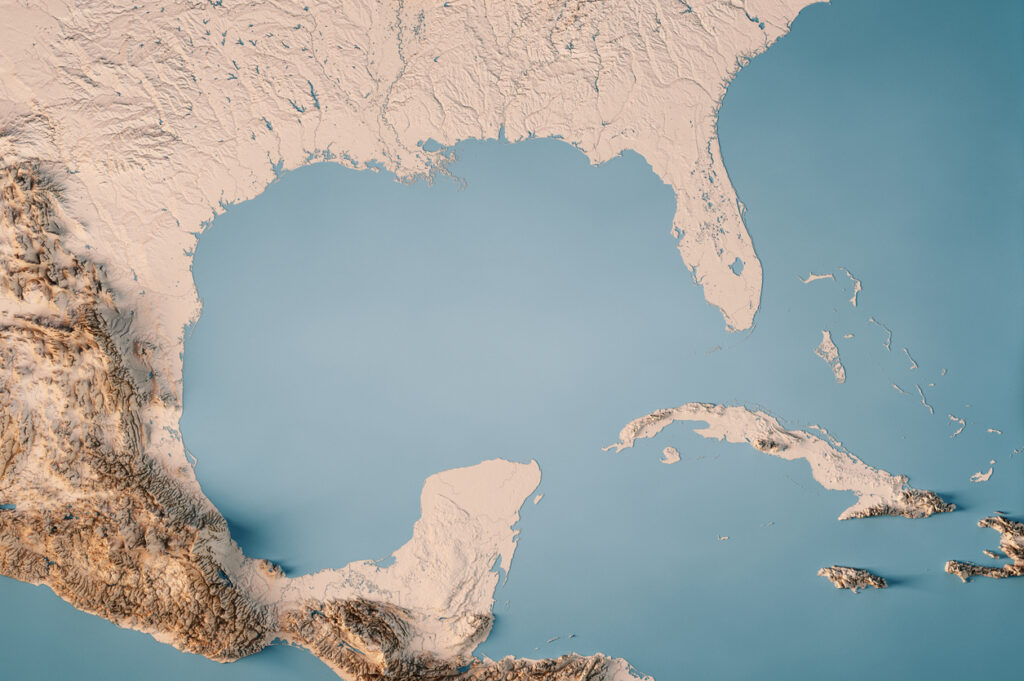
Library catalogs have always been battlegrounds where content is not merely described but debated. President Trump’s January 20, 2025, Executive Order 14172 directing the renaming of longstanding geographical designations “Mount Denali” and “Gulf of Mexico” to the politically loaded “Mount McKinley” and “Gulf of America” reveal the naked truth of what cataloging has always been: a battlefield where meaning is contested and conquered.
The Word as Weapon and Shield
What makes cataloging such a potent political instrument is not just its ability to name, but its power to make those naming decisions appear neutral and inevitable. Former American Library Association President Emily Drabinski has argued that catalogs don’t merely contain bias — they systematically disguise that bias behind a facade of technical objectivity.
Let’s not kid ourselves. When the Library of Congress spent decades using “Illegal aliens” as an authorized subject heading — despite overwhelming evidence of its pejorative nature — it was exercising power, not objectivity. Librarian Sanford Berman recognized this in 1971 when he published Prejudices and Antipathies: A Tract on the LC Subject Heads Concerning People, documenting how LC headings perpetuated racism, sexism, and xenophobia under the veneer of neutrality.
Now we face a new chapter where language is being weaponized with explicit intent to erase and control. The Trump Administration’s Executive Orders are part of a broader trend of restrictions on diversity, equity, and inclusion (DEI) efforts in higher education. These directives are not isolated incidents but reflect a concerted effort to reshape the landscape of American universities. They are part of a broader assault on language that threatens the very foundation of library work. When we can’t speak of certain realities, how do we catalog materials about them? And how will patrons find resources that are not discoverable through subject searches for now-forbidden terms?
Celeste West and the Revolting Librarians would recognize this moment. In 1972, they exposed how professional “neutrality” served as a shield for complicity with oppressive systems. Their spiritual descendants today face stark choices: comply with linguistic authoritarianism or risk their livelihoods defending intellectual freedom.
Today’s overt politicization strips away that veneer, confirming what critical catalogers have long maintained: neutrality in classification simply doesn’t exist.
Bigotry Built Into the System
The uncomfortable truth is that cataloging has always been weaponized against marginalized communities. Consider Melvil Dewey — whose decimal classification system organizes libraries in 135 countries worldwide. His system relegates women’s issues to domestic subcategories, while centering the experiences of White Christian men as universal. When “women’s health” becomes a minor subdivision and “health” means men’s health by default, classification performs exactly as its creator intended: marginalizing some voices while naturalizing others.
The racism in Dewey’s system wasn’t accidental either. His classification placed materials about non-White cultures in ghettoized sections that implied their inferiority to Western civilization. Indigenous knowledge systems were buried under “folklore” while European philosophy received primary classification status.
These weren’t neutral technical decisions — they were expressions of Dewey’s worldview, one that saw White Christian masculinity as the organizing principle of knowledge itself. When today’s directives mandate language changes that center American exceptionalism and erase diverse perspectives, they’re not departing from library tradition. They’re honoring it.
As recently as 1989, the Dewey Decimal Classification still classed “Homosexuality” under Social Problems, often alongside “Prostitution” and “Obscenity.” Radical catalogers fought for decades to remove such headings, often facing resistance from traditional cataloging professionals who cited standards preservation, historical continuity, and technical neutrality as reasons to maintain the status quo.
Ironically, we now see similar justifications from some of these same professionals when defending the implementation of new politically-charged nationalist terminology mandates. The difference is that while previous classification choices pretended to be objective technical decisions, today’s explicitly political directives have stripped away this facade of neutrality.
This shift exposes what critical catalogers have argued for generations: subject headings have never been neutral technical metadata but have always functioned as political statements about what deserves recognition and how knowledge should be organized. The new directives don’t introduce politics into cataloging — they merely make visible the politics that were always there.
LCSH: A Legacy of Problematic Representation
The Library of Congress Subject Headings (LCSH) system provides a prime example of these embedded politics. Despite being the most widely used subject classification system in the world, LCSH continues to perpetuate marginalization through its controlled vocabulary. While claiming to be a neutral knowledge organization tool, it systematically under-represents the experiences and terminology of marginalized communities, preserves outdated and sometimes offensive language, and structures knowledge in ways that center dominant perspectives. Even after decades of critique and reform efforts, LCSH remains a system where certain voices and experiences receive detailed classification, while others are flattened into broad, often problematic categories — revealing how institutional power shapes what information is easily discoverable and how communities are represented in our knowledge systems.
Consider how LCSH still employs “Sexual minorities” as a collective term for LGBTQ+ people — phrasing widely considered strange and outdated. The system conflates sex and gender in many headings, using “Sex” interchangeably for both “Gender (Sex)” and “Sex (Gender),” reflecting an institutional failure to acknowledge distinct concepts.
The gap between LCSH’s representation and contemporary terminology is stark. Rachel K. Fischer’s researchshows that LCSH and Library of Congress Demographic Group Terms (LCDGT) overlap with only about 25% of LGBTQ+ identity terms found in the Homosaurus, a specialized LGBTQ+ vocabulary. This means that three-quarters of the language LGBTQ+ communities use to describe themselves remains unrecognized in our primary national cataloging system.
Progress remains glacial. While some changes have occurred — “illegal aliens” was eventually replaced with “noncitizens” — many problematic headings persist, including “Indians of North America.” This isn’t merely a question of semantic preference; these terminology choices actively obstruct information access for users searching with contemporary language and perpetuate outdated conceptions of marginalized communities.
Hope Olson‘s The Power to Name: Locating the Limits of Subject Representation in Libraries, published in 2002, exposes how mainstream classification systems marginalize materials about women, people of color, and other non-dominant groups through structural biases in category formation. The current federal directives merely make explicit what Olson proved was always implicit: classification can oppress.
The Fractured Catalog
The catalog itself has become schismatic, split between its function as an instrument of state power and its aspiration to facilitate democratic access to knowledge. This duality creates tension within the catalog system. On one hand, it must adhere to standardized classification methods that often reflect societal biases. On the other hand, it strives to be an inclusive repository of knowledge that represents all viewpoints. This split nature of the catalog highlights the ongoing challenge in library science: balancing the need for organization and standardization with the goal of equitable representation and access to diverse knowledge.
When catalogers implement politically motivated terminology changes, they become unwilling performers in a linguistic ritual that normalizes certain worldviews while erasing others. But there’s potential for subversion within these systems. Just as Judith Butler identifies how drag performances can expose the constructedness of gender norms, catalogers might employ what we could call “bibliographic drag” — implementing mandated terminology changes in ways that highlight rather than hide their artificiality.
Imagine catalog records where the new term “Gulf of America” appears with additional subject headings like “Geographical names–Political aspects–United States” or “Executive orders–United States–2025” revealing its recent provenance and political motivation, turning what was meant as invisible infrastructure into visible commentary.
This strategy not only enhances discoverability but also turns catalog records into tools for critical engagement with political and social issues.
Power, Knowledge, and Classification
Michel Foucault‘s concept of “power/knowledge” illuminates how control over what can be said is inseparable from control over what can be known. The federal mandates to purge certain words from our catalogs aren’t just linguistic preferences — they’re attempts to reshape the boundaries of thinkable thought.
When we can no longer use “Mount Denali” or “Gulf of Mexico” as subject headings, we’re not just relabeling existing knowledge; we’re restricting which questions can be asked and which connections can be made. The catalog becomes what Foucault called a “disciplinary apparatus,” training users in government-approved ways of perceiving reality.
The Invisible Violence of Metadata
Why should anyone outside library technical services care about catalog politics? What does it matter if the Gulf of Mexico is renamed “Gulf of America” in our catalogs?
It matters because classification violence doesn’t stay confined to metadata records. The language used in knowledge organization systems wield power in shaping how information is accessed, understood, and utilized across societies around the world. When researchers can no longer find resources on “Gulf of Mexico” because that term has been purged, their research becomes circumscribed by political decree rather than intellectual curiosity. When historical materials about “Mount Denali” are reclassified under “Mount McKinley,” we witness the real-time rewriting of history through bibliographic means.
The violence isn’t merely symbolic. Changes in cataloging language can affect how marginalized groups are represented and how easily information about these communities can be found. If future federal decrees replace terms like “reproductive rights” with politically motivated euphemisms, healthcare researchers will no longer be able to efficiently locate materials and clinical practice will suffer. If climate scientists’ work becomes harder to discover because standard terminology has been obfuscated, policy responses will lag. Cataloging decisions made today determine what knowledge remains accessible tomorrow.
This connects to what philosopher Miranda Fricker terms “epistemic injustice” — the harm done to individuals and communities in their capacity as knowers. When the language communities use to describe their own experiences is systematically excluded from knowledge organization systems, they must translate their realities into government-approved terminology or risk invisibility.
Make no mistake: what begins as cataloging politics inevitably becomes thought control. By controlling what can be named, authorities control what can be known, taught, researched, and ultimately imagined as possible.
Beyond Resistance: Reimagining Authority
The current crisis forces us to confront fundamental questions about authority in cataloging. If official vocabulary sources can be weaponized against intellectual freedom, perhaps the problem isn’t just which terms are authorized but the concept of authorization itself.
What might cataloging look like if it embraced what Shannon Mattern calls “intellectual infrastructure” — systems designed not to enforce singular meanings but to facilitate multiple interpretations? What if catalog records functioned less like pronouncements from authority and more like conversations among different ways of knowing?
The technological tools already exist. Faceted classification allows users to approach information from multiple entry points rather than following a predetermined hierarchy. Linked data models can explicitly represent relationships between different naming conventions, preserving both mandated terminology and community-preferred language while making the power relationships between them visible. User-generated tagging systems, when implemented alongside controlled vocabularies, create spaces where community knowledge can thrive even when official language fails.
Libraries like the Xwi7xwa Library at the University of British Columbia demonstrate how alternative classification systems can center Indigenous perspectives rather than marginalizing them. Their adaptation of the Brian Deer Classification shows how knowledge organization can emerge from the communities it serves rather than being imposed from above. Similarly, the Homosaurus international linked data vocabulary provides a model for how community-developed terminologies can exist alongside institutional systems, offering pathways to discovery that LCSH alone cannot provide.
Digital humanities projects like the Early Caribbean Digital Archive implement reparative cataloging, explicitly addressing the colonialist assumptions embedded in traditional metadata by incorporating marginalized perspectives and contested terminologies. These examples show that the obstacle isn’t technical but conceptual — we remain bound to a professional ideology that equates standardization with access, even when standardization actively impedes access to certain kinds of knowledge.
This doesn’t mean abandoning organization or embracing chaos. It means reconceiving authority as emerging from communities rather than being imposed upon them. It means classification systems that acknowledge their situatedness rather than pretending universality. It means catalogs that preserve the history of terminological changes rather than silently implementing them.
Practically, this could take the form of multi-layered catalogs where government-mandated terminology exists alongside community-preferred language, with transparent pathways between them. It might involve explicit documentation of terminological shifts within catalog records themselves, turning metadata into a site for critical engagement rather than passive acceptance. It could mean developing consortial approaches where libraries collectively implement alternative access points when official terminology becomes compromised.
As we watch language and library catalogs transform under political pressure, we’re experiencing the logical conclusion of a cataloging philosophy that has always prioritized authority over pluralism and standardization over justice. The current crisis isn’t a departure from library tradition but its culmination—the moment when the violence always hidden within our classification systems becomes impossible to ignore.
If we take anything positive from this moment, perhaps it’s the opportunity to reimagine cataloging from the ground up. Not as a disciplinary apparatus that enforces authorized meanings, but as an emancipatory practice that connects users to information through multiple linguistic pathways. Not as a technology of control, but as an infrastructure of possibility.
The revolting librarians would accept nothing less. Neither should we.
Editor’s Note: This article is republished with permission of the author with first publication on The Scholarly Kitchen.